Many IT budgets now have two lines moving in opposite directions. AI spend is climbing, and the money for it is coming out of infrastructure maintenance and legacy software contracts. Should you cut maintenance to fund AI? Rarely, and never across the board. The systems you stop maintaining are the systems your AI has to run on, so the cut lowers the ceiling on what the AI can return.
We have built and maintained production systems since 1998. Most of the AI work we take on starts inside an older application that someone decided could wait a year, so we tend to get the call after this trade goes wrong.
Where is the AI money coming from?
It is coming mostly from reallocation, not new budget. A Goldman Sachs survey of CIOs, reported by IT Brew on July 6, 2026, found that 42 percent of respondents expect AI to exceed 10 percent of their IT budgets within three years, up from 35 percent in the prior survey. Overall IT spending dipped slightly. Two thirds of AI inference cost is funded by reallocation, and Goldman's analysts warned that "there may be some crowding out of category spend not tied to AI."
IT Brew names the categories losing out: infrastructure maintenance and legacy software contracts. In practice that means patch cycles, monitoring renewals, and the support contract on the system nobody wants to discuss. In a flat budget, an AI mandate eats the line items with the weakest internal advocates.
The instinct is not irrational. A maintenance line rarely produces a visible change from one budget cycle to the next, and the AI line has a board mandate behind it. The problem is what the maintenance line was actually buying.
Deferred maintenance is a loan, not a savings
Deferred maintenance is work you still owe, postponed to a year when it costs more. Cutting the budget does not stop the systems from aging. You stop paying down the principal, and older systems charge interest.
The interest arrives in predictable forms.
Dependencies drift. The eventual upgrade grows from a sprint into a project.
Support windows close on fixed dates. Adobe's product support matrix lists November 10, 2025 as the end of core support for Adobe ColdFusion 2021, and November 10, 2026 as the end of extended support. A deferred upgrade does not move either date.
Monitoring lapses quietly. The first sign of a failing batch job becomes the business process it feeds going dark.
Knowledge walks out. The people who understood the system move on, and they take the only accurate documentation with them.
None of that shows up in the year of the cut. It shows up later as unplanned work, at emergency rates, on a timeline you do not control.
Why neglected systems cap the AI return
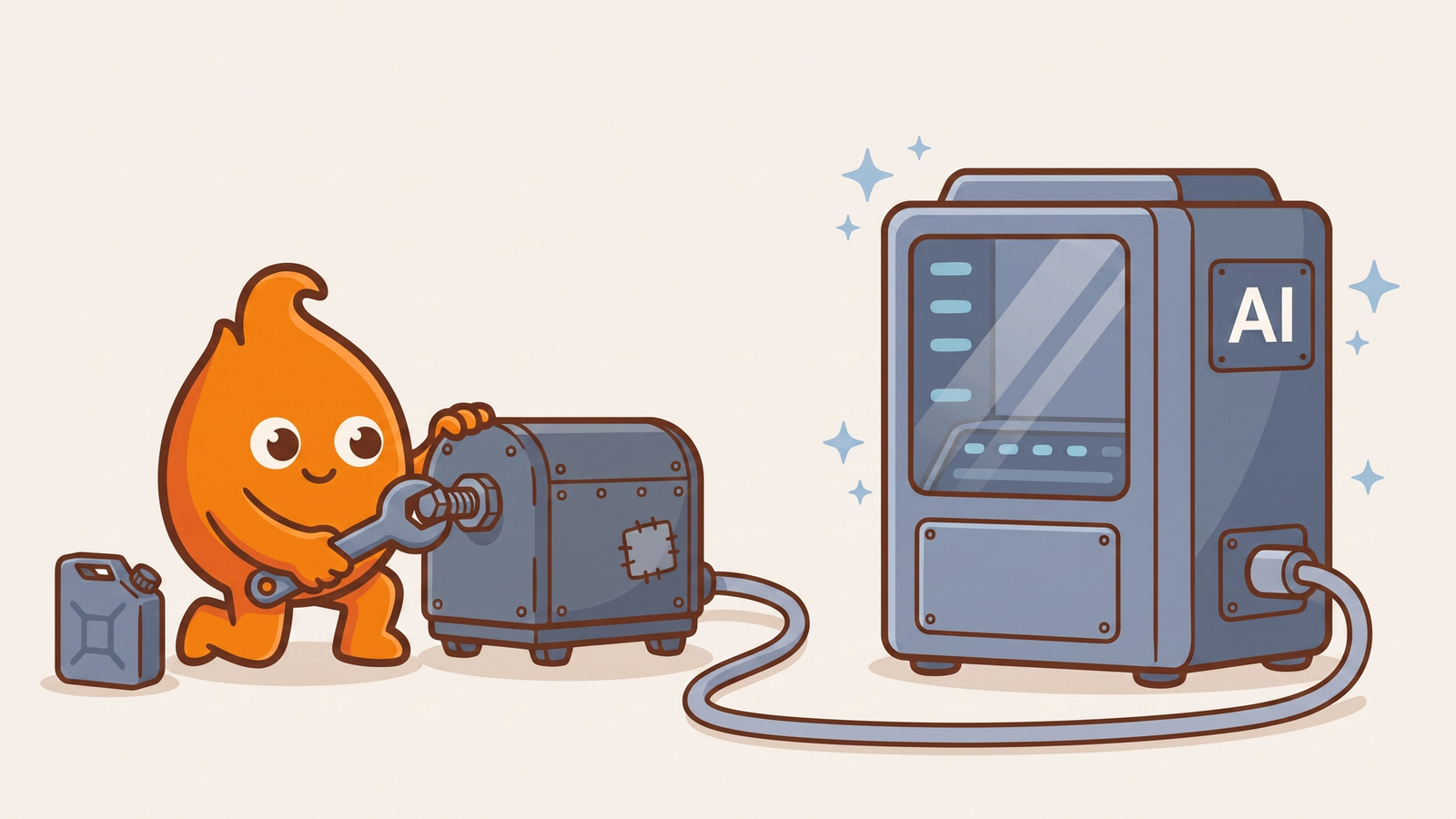
The AI investment runs on the same systems the maintenance cut neglects. Agents read from them, write to them, and automate the processes they implement.
Point an agent at a clean data model with tested interfaces and it compounds your delivery capacity. Point the same agent at un-normalized tables, undocumented batch jobs, and integrations held together by tribal memory, and it amplifies all of it, confidently and at scale.
The failure comes in two forms. The first is output quality: an AI system grounded in degraded data produces plausible answers from wrong inputs, and nobody notices until a decision rests on them. The second is integration cost: the business case assumed the agent could talk to your systems, and the discovery that it cannot do so safely arrives after the spend is committed. Both failures get booked against the AI. Both were bought by the maintenance cut. This is the budget-side version of the argument in fix the foundation before you bolt on the agent.
How to fund AI without eating the foundation
Most older portfolios hold real savings. The discipline is telling the difference between cutting a system and merely defunding it.
Retire deliberately. Decommission the system, migrate its last consumers, and end its contracts. That is permanent savings. Skipping maintenance on a system still in production is risk under a nicer name.
Triage per system. Remediate, modernize, or leave alone is a per-system decision with a framework. A flat percentage cut hits load-bearing systems as hard as dead ones.
Put remediation on the AI line. If the agent roadmap depends on a data layer that needs cleanup, that cleanup belongs in the AI business case, stated plainly.
Protect the maintenance you cannot see. Monitoring, alerting, backup verification, and support coverage fail silently when defunded. The cost surfaces as incident response, the most expensive form of maintenance there is.
If you cannot say which of your systems can safely absorb a leaner year, run that diagnostic before the reallocation, not after. An AI readiness assessment names the binding constraint between the systems you have and the AI you are budgeting for. If a ColdFusion server is on the list, our ColdFusion migration work covers the upgrade side. Either is a cheaper way to find out than the incident.