
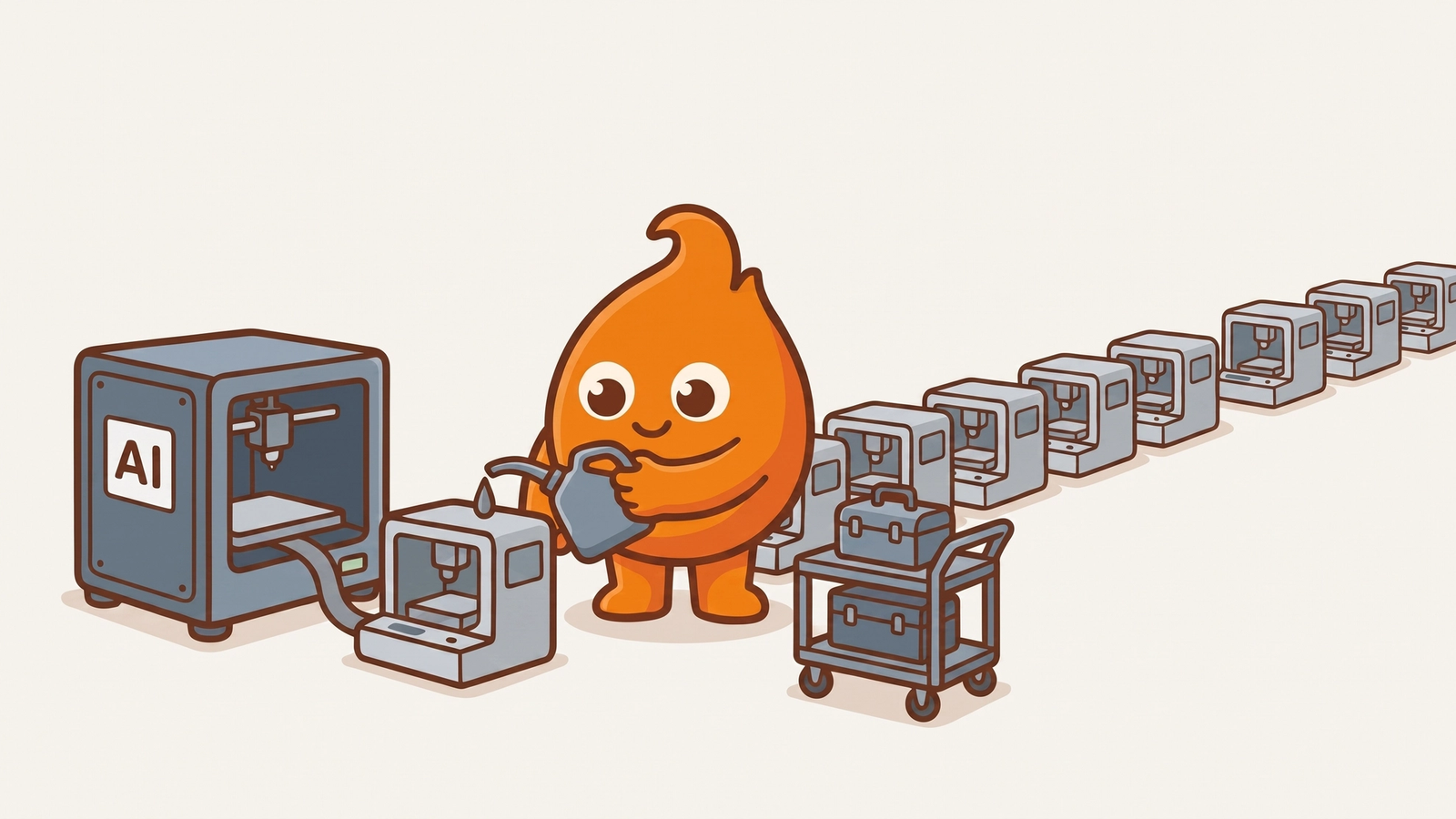
Most ROI models for a coding-agent rollout count the same things: seats, token spend, hours saved per feature, extra review time. Almost none count comprehension. Who will understand this code in a year, and what will it cost to change it then?
That missing line is the maintenance cost of AI-generated code, and on older systems it decides whether the rollout pays off. Agents make code cheap to write. They do nothing to make it cheap to understand, and on a system nobody fully understood before the agent arrived, that gap compounds.
We have built and maintained production systems since 1998, and most of our modernization work happens in codebases whose original authors are long gone. At that distance, maintainability is not abstract. It is the invoice that arrives ten years after the code shipped.
Three signals from July and August 2026
Between July 20 and August 10, 2026, three separate sources concluded that agents make code cheaper to write but not cheaper to understand.
Thoughtworks measured the cost of structure. In The Economic Benefit of Refactoring, published July 30, 2026, Giles Edwards-Alexander refactored a 17,155-line data access file in an agent-built application. Input tokens for the same task fell from 159,564 to 27,360, an 83% cut, and every later change to that layer got cheaper too.
InfoQ called comprehension architecture. An August 10, 2026 InfoQ article by Jacobus Meintjes and three co-authors argues that "human comprehension is an inherent architectural characteristic that must be actively maintained," because generated code no longer builds understanding as a side effect of writing it.
GitHub made maintainability a product. On July 20, 2026, GitHub Code Quality reached general availability, with maintainability and reliability scores, coverage on pull requests, quality gates, and organization dashboards.
Why older systems change the math
Most published thinking on AI code maintainability starts the clock when the agent arrives. The refactoring experiment ran on a greenfield application one developer built with agents. The InfoQ guidance assumes a team that once shared a mental model and needs practices to keep it. The tooling assumes a modern repository wired into modern CI.
Comprehension debt is the gap between what a system does and what anyone on the team can explain about it. Most systems we walk into ran up that debt long before any agent existed. The engineer who understood the design left years ago. The documentation describes a version production stopped running long ago. Point an agent at code like that and it writes plausible changes on top of logic nobody fully understood. The debt does not add. It compounds.
No AI coding ROI model we have reviewed prices that compounding. The generation savings show up this quarter. The comprehension cost lands two or three years out, paid the way legacy work always is: slower changes, riskier releases, and fewer people willing to touch the system.
How do you price maintenance into AI coding ROI?
Price it by adding three lines to the ROI model before the rollout starts.
A comprehension budget, spent before generation. On a system with history, rebuild understanding on purpose before an agent writes into it. Ground the agent in evidence about what the system does, the discipline behind our ColdFusion migration work, and charge that effort to the project. It is not free, and treating it as free only moves the cost later.
Structure as a cost input. Structure sets the price of every future change, human or agent. The token math in what refactoring saves once agents do the work makes that concrete. Cleanup belongs in the rollout budget, not the deferred-maintenance pile where it usually dies, a pattern covered in why cutting maintenance to fund AI backfires.
An owner for every agent change. Someone on the team must be able to explain what each change does and why it is safe. If nobody can, the change is not done. This rule is cheap to state and expensive to skip. It is the one control that stops the debt from compounding silently.
The question to ask before you buy
Agents do speed up delivery. The question is whether your ROI model charges that speed for the understanding it consumes. On a system already carrying ten years of comprehension debt, that line decides whether the project pays off at all. An AI readiness assessment is where we price it, before real money goes into finding out the hard way.